
One of the highlights of the fall, the Critical Arctic Studies -symposium was held in Rovaniemi early in October, 2024. The theme of the symposium was Thinking with Water: Exploring the edges. The symposium was organised by Monica Tennberg, Hannah Strauss-Mazzullo, Heidi Konttinen and Sohvi Kangasluoma, from the Arctic Centre, University of Lapland and Frank Sejersen from the University of Copenhagen.

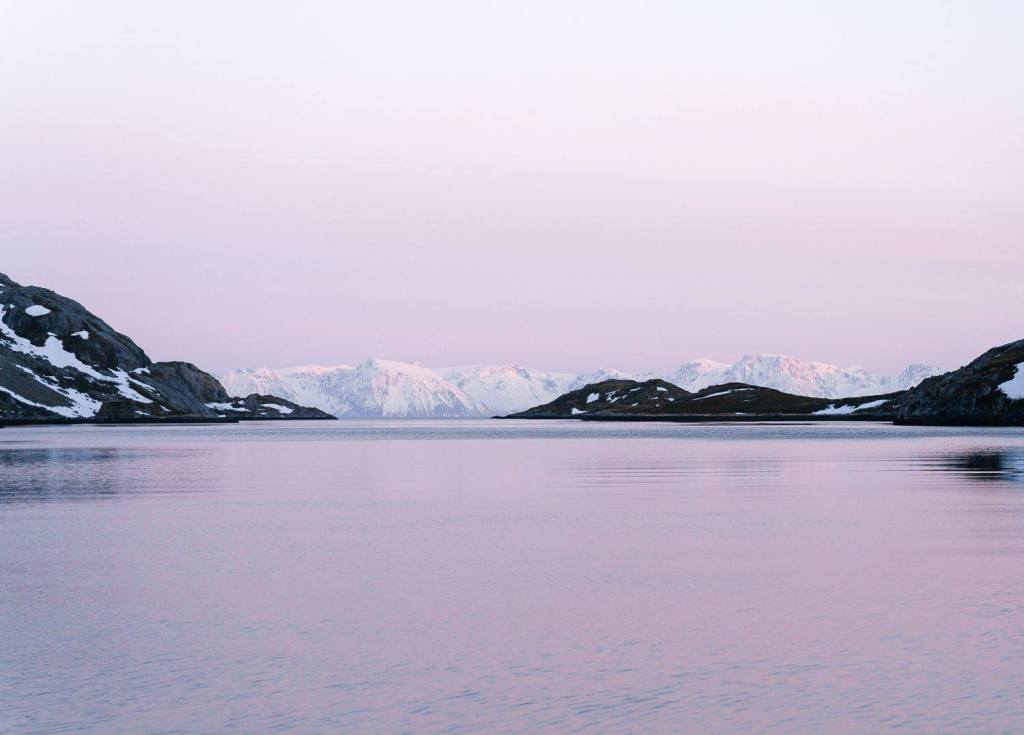
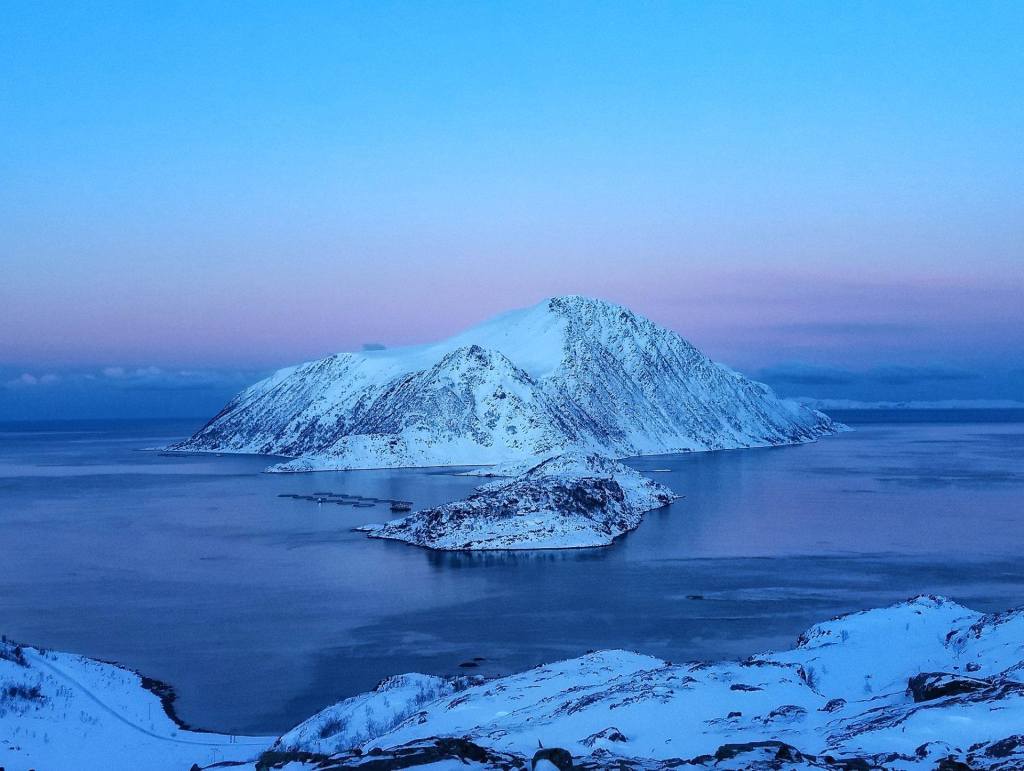
// Thinking with water //
Social sciences have increasingly turned toward oceans and water, after a history of focusing merely on land and land-based issues. We joined forces with scholars such as Braverman & Johnson (2020); Alaimo (2019) and Steinberg & Peters (2015), who encourage us to think with water and explore what that could mean. To challenge the idea of treating the sea and water as a “space ‘outside’ society” (Steinberg 2001, 207), creative intellectual shifts need to be taken. Combining social sciences, legal thinking and art, in the symposium water, in different forms, was taken seriously and really thought about.
While thinking with water could easily be turned into shallow phrase that’s being tossed around, the presenters dived deep into the topic and explored what it could mean, to think about (and with) the fish, water and ice, from a post-anthropocentric viewpoint where human experience is not necessarily the most relevant one.
In her keynote, Associate Professor Solveig Joiks (Sámi Allaskuvla/Sámi University of Applied Sciences) talked about the Deatnu river and the salmon living there. She offered insights into the difference of comprehending the fish and the river from the viewpoint of the field biologist, and from thinking about the salmon with Sámi knowledge and practises of care. In her presentation, it became evident that there are several salmons in the Deatnu: the salmon of the biologists, and the salmon of the Sámi. The discussion continued into wondering, why is it always the numbers, calculations and the techno-scientific worldview, that controls our world – both terrestrial and marine.
// Exploring the edges //
In another keynote, Professor Philip Steinberg (University of Durham), searched for the edges in the form of the sea ice, namely in the Norwegian national discourse. He discussed the creation and meaning of the ice edge discussion and addressed different ways and historical narratives of understanding and unfolding the sea ice in Norway, demonstrating the complexity and the political nature of sea ice. For a nation where sea ice exists mainly in Svalbard and its surrounding waters, the sea ice has occupied much space in the political space. It is a liminal space of water, politics and edges, where competing interests (such as oil and gas industry, environmental protection) are in constant conflict.
.
The various presentations by participants addressed multiple themes from the materiality of the Arctic Ocean to seal-hunting traditions on the Bothnian bay, from Arctic fiber cable projects to the role of oceans within the Law of the sea, and from artistic practices for understanding a river, to municipality projects of restoring wetlands. Albeit not always said aloud, the idea of caring for the water and the creatures living in it was present in many of the presentations, and materialised in different ways.
Like waves, throughout the symposium, some themes emerged again and again: the legal rights of nature – and entities such as ocean, rivers and salmon – and how far could they go, why are so many things still defined only by natural science discourses while ignoring Indigenous and local knowledge, and how new ways of constructing human-nature relations could enhance the wellbeing of the earth and its waters.
The edges of academic watery discussions remain still to be found.
Text: Sohvi Kangasluoma
Photos: Juho Karhu
References:
Alaimo, S. (2019). Introduction: science studies and the blue humanities. Configurations 27(4), 429-432. DOI: 10.1353/con.2019.0028.
Braverman, I. & Johnson E.R. (Eds.). (2020). Blue Legalities. The Life & Laws of the Sea. The Journal of Legal Pluralism and Unofficial Law, 52(3), 359-363. Durham and London: Duke University Press.
Steinberg, P. E. (2001). The Social Construction of the Ocean. Cambridge University Press.
Steinberg, P. & Peters, K. (2015). Wet Ontologies, Fluid Spaces: Giving Depth to Volume through Oceanic Thinking. Environment and Planning D: Society and Space 33(2), 247–264.
- Call for papers- SI on Caring for Life in the ArcticDear CAS friends & colleagues, As part of the 2025 CAS autumn symposium, we would like to compile a special issue on Caring for Life in the Arctic. You are cordially invited to submit a manuscript that explores how care is enacted, disrupted, or mobilised across scales—from local infrastructures and Indigenous knowledge systems to globalContinue reading “Call for papers- SI on Caring for Life in the Arctic”
- Reflections on the first CAS webinar: Creativity and critical thinking in artistic and academic practicesAt first glance, art and science appear to belong to entirely separate spheres. Visual, performative, applied, literary, media, or conceptual arts typically operate within aesthetic, intuitive, and creative domains, whereas academic and applied sciences are grounded in replicable research methods, empirical evidence, and theoretical frameworks. The division between these realms, along with the compartmentalisation ofContinue reading “Reflections on the first CAS webinar: Creativity and critical thinking in artistic and academic practices”
- Art/Place – A Critical Arctic Studies Webinar SeriesArt/Place is a three-part webinar series exploring how artists and/or arts-based practitioners engage with Arctic places through diverse creative practices and perspectives. Hosted by the UArctic Thematic Network on Critical Arctic Studies (CAS), each one-hour session will bring together three artists/practitioners whose work is in, with, or about, a specific Arctic location. The series will beginContinue reading “Art/Place – A Critical Arctic Studies Webinar Series”
- Call for Arctic Circle panelsThe CAS team has organized a panel at the Arctic Circle conference twice. Our CAS partner, Page Wilson from the University of Iceland, has prepared two panel proposals for the Arctic Circle Assembly 2025, which is held in mid-October. Please take a look at the two proposals below and contact Page (plw@hi.is) if you areContinue reading “Call for Arctic Circle panels”
- Fresh off the press: Understanding Human-Nature Practices for Environmental ManagementThis volume, edited by Professor Carina Keskitalo (Umeå University, Sweden), critically examines how the nature-culture binary permeates land-use and nature management practices in Northern Europe and how such dichotomist approaches can be transcended to respond to current sustainability challenges. The open-access chapters are available here.
- Call for papers: Water as an object and participant in politics (Finnish Political Science Days April 14–16th 2025, Rovaniemi)Hannah Strauss-Mazzullo, Sohvi Kangasluoma, and Monica Tennberg (POST-BOTHNIA project) are organizing this panel on water-society relations. Water as an object and participant in politics The world of politics does not only consist of land and air, water covers the majority of the planet. In its different forms and places, water is a part of societal activitiesContinue reading “Call for papers: Water as an object and participant in politics (Finnish Political Science Days April 14–16th 2025, Rovaniemi)”
 Thematic Network on Critical Arctic Studies